The Seven Fragments I Leave Behind.
There’s a weight that comes with being a Black man in America. The weight of history, of expectation, of survival. We carry it every day. We feel it in our shoulders. We express it in our voices. It shows in the way we move through a world that was not built for us, but was built on us.
That weight is heavy, but it is not a burden I regret. It is the same weight that shapes me, teaches me, and strengthens me. It reminds me that my life is not just mine alone. It belongs to those who came before me, and it belongs to those who will come after.
When I think about what I will leave behind for my family, I think of Horcruxes. Not the cursed kind, hidden in darkness like in the stories of Voldemort, where pieces of his soul were broken and scattered. No, my horcruxes are different. They are not fragments of fear; they are fragments of love. They are intentional pieces of me, placed so that when I am gone, my family will still carry me with them.
These are the seven horcruxes of a Black man.
Faith

I’ll be honest: anyone who knows me knows I was not the most religious man. I’ve had my issues with the church. The hypocrisy is hard to accept. The doors that close when you’re struggling. These are some of the things that turn people away instead of pulling them in. I’ve come to realize that faith and religion are not the same thing.
The faith I have now isn’t about knowing — it’s about trusting. Trusting that even when the map fades, the next step will still appear beneath my feet. Faith, for me, is less about memorized scripture and more about movement — the act of still getting up, still showing up, believing that my story isn’t finished.
There were days I didn’t pray because I didn’t have the words. But somehow, grace still found me. In the quiet between heartbeats. In the laughter of my children. In the moments when the chaos paused just long enough for me to remember I was still breathing. That’s faith too — not loud, not churchy, not perfect — just real.
Like most people, I thought faith was a transaction — do right, get right. But I’ve learned it’s a relationship. It’s not about deserving; it’s about devotion, about showing up for life, even when life doesn’t show up for you. About understanding that the same hands that break you can also build you — if you’re willing to stay open.
When looking back at the near misses — the nights I shouldn’t have made it home, the moments I was too angry to see clearly — I know now that something bigger was steering. Call it God, call it ancestors, call it grace — but I’ve seen too much to call it coincidence.
Faith has become my anchor and my rebellion. Because in a world that tells Black men we’re disposable, believing that we are chosen, loved, and worthy of redemption is an act of defiance. My faith is my resistance — a refusal to let despair have the last word.
And I want my children to inherit that same defiance. I want them to know that faith doesn’t make you invincible; it makes you intentional. It’s not the absence of fear — it’s the decision to move through it. It’s knowing that even if everything falls apart, something divine will help you rebuild.
So the faith I leave behind isn’t bound by the walls of a church — it’s carved into the walls of my heart. It’s the whispered prayer before a big decision, the peace in the middle of the storm, and the quiet strength that says: I don’t know how, but I know I will.
Knowledge

Knowledge has always been the forbidden fruit. It is the temptation to want more than subjugation. It is the disobedience to drink from a “whites only” fountain, to refuse to sit in the back of the bus, to demand not just survival but dignity.
Even now, freedom of speech is rightly one-sided. The pages of Black history are being turned away, ripped out of classrooms, and usurped by a new whitewashed narrative. To know the truth, to speak it, to teach it — that is rebellion. That is power.
The pressure of all this has created what I now carry: my own oral Torah — The Miseducated Blk Man. For me, Sunday dinner at Big Momma’s feels different when we break bread with the scripture of Black history and with our own family’s struggle. It’s more than a meal; it’s a classroom, a sanctuary, a reminder.
But knowledge is not just what we learn — it’s what we unlearn. It’s peeling back the lies told in the name of civility and progress, reintroducing ourselves to truths that were buried under propaganda and shame. It’s realizing that history was never lost; it was intentionally hidden.
Our ancestors didn’t have access to libraries, so they became them. Every hymn was a history book. Every scar was a syllabus. Every name whispered in the dark was a chapter kept alive through breath alone. Their brilliance was never in the ink, but in the endurance.
Knowledge, then, is not a privilege — it’s a weapon. It’s what allows us to name the systems that tried to define us, to reclaim the language that once enslaved us, to write ourselves back into the story. When you know who you are, no institution, title, or textbook can tell you who you’re not.
So I read. I listen. I learn. I also teach, not to sound wise but to stay free. Because ignorance is inherited just like trauma — but so is truth. My children will not be miseducated; they will be illuminated.
Knowledge is survival. It is power. It is memory. It is the reminder that we are more than statistics, more than stereotypes, more than the limits placed on us. To know is to rise. To share is to liberate.
Health

Health is rebellion. In a world that profits from our pain and medicates our symptoms instead of curing the cause, choosing wellness is a radical act of self-preservation. Every time I drink water instead of soda, rest instead of grind, or breathe through the stress instead of burying it — I’m breaking a cycle. I’m reclaiming my body from generational fatigue.
Because the truth is, we’ve been conditioned to endure, not to heal. We normalize exhaustion. We glorify the hustle. We wear pain like a badge of honor. But real health isn’t just the absence of illness — it’s the presence of peace. It’s the alignment of body, mind, and spirit in a world designed to fracture all three.
I’ve learned that healing isn’t a linear process. It comes in small choices: skipping the drive-thru, forgiving myself, going to therapy, sitting in the sun, stretching in silence. Healing means redefining what strength looks like — not pushing through pain, but listening to it. Because sometimes your body isn’t betraying you; it’s begging you to slow down.
For me, health has become legacy work. I don’t just want to pass down my DNA — I want to pass down discipline, awareness, and balance. I want my children to see vegetables as nourishment, not punishment. I want them to understand that meditation is medicine, that sleep is a sign of success, and that joy is a vital sign.
Our ancestors didn’t have the luxury of rest. They fought to live. We must live to heal. That is our evolution — to take what they survived and turn it into wholeness.
Now, when I pray over my meals, I don’t just thank God for the food — I thank Him for the chance to break curses, for the grace to care for a temple that spans generations. My health is no longer a chore; it’s a covenant. And each step, each breath, each act of care… is proof that I am honoring the body that survived enough to get me here.
Wealth

True wealth is generational, not just generative. It’s not measured in the commas of an account but in the continuity of a name. Wealth is when your grandchildren inherit options instead of obstacles. It’s when the family tree stops bending under the weight of struggle and starts bearing fruit that nourishes everyone connected to it.
For too long, we’ve been taught to chase symbols instead of systems — to buy the brand before we build the business, to rent status instead of owning stability. But real wealth whispers, it doesn’t shout. It’s the quiet confidence that your bills are paid, your children are covered, and your time belongs to you.
Wealth is also collective. It grows when we circulate it with intention — buying from one another, mentoring the next one up, and creating safety nets so our people don’t keep falling through the cracks. The dollar is a tool, but community is the engine that multiplies it.
I’ve learned that money without mission is just motion. The goal isn’t to escape the struggle and forget the block; it’s to return with knowledge and build something better upon it. That’s how we disrupt generational poverty — not by hoarding what we earn, but by teaching what we learn.
And maybe that’s the most valid form of wealth — peace of mind. The kind that lets you rest, not just sleep. The kind that reminds you you’ve already broken the curse by choosing differently.
Wealth, when rooted in purpose, becomes ministry. It’s how we repair what was stolen. It’s how we fund our freedom. It’s how we remind the world — and ourselves — that we were never meant just to survive prosperity; we were meant to steward it.
Resilience

If my skin were just a little lighter and my hair a little straighter, life’s blows could have made me a stuntman for Rocky. I’ve been beaten and broken, yet each time I’ve gotten back up and continued the fight — eyes puffy, hands heavy, spirit exhausted. That was my cross to bear.
But resilience is more than just withstanding pain. Passing the torch, I want my children — and your children — to inherit a different kind of resilience. Not one that only survives the beating, but one that refines whatever seed was planted, helping it bloom. A resilience that becomes a light, attracting others to the cause, multiplying strength instead of merely enduring hardship.
Because resilience isn’t just recovery, it’s resistance. It’s the quiet decision to show up again when nobody’s watching, to love when your heart still limps, to rebuild when the world already wrote your eulogy. It’s not the absence of scars — it’s the audacity to make art out of them.
My resilience has teeth. It bites down on despair and refuses to let go. It’s the sound of my ancestors humming through the pain, the rhythm of calloused hands clapping in defiance of every chain meant to silence us. It’s the kind of strength that grows in the dark, watered by tears and carried in whispers — “keep going.”
Resilience means I am not who the world expected me to be. It means I’ve danced with defeat and still learned the choreography of hope. It means that every failure, every heartbreak, every sleepless night was not wasted — it was training—conditioning for the next climb.
One day, I hope my children won’t need this kind of armor. I hope they’ll inherit a softer world — one that doesn’t require bleeding hands to prove their worth. But until then, I’ll keep my palms open, calloused and unashamed, so they know where they came from — and what it costs to rise.
Community

No Black man makes it alone. No Black family survives in isolation. Our strength has always been the village — neighbors who raise children, churches that lift spirits, movements that demand change.
Family is more than blood. Family is the village that surrounds you, holds you up, and calls you higher. Without community, we are vulnerable. With it, we are unstoppable.
But community isn’t just where you come from — it’s what you pour into others. It’s the unspoken bond between strangers who nod in passing, the shared rhythm in a room full of Black joy, the silent understanding when grief visits uninvited. It’s barbershops that double as therapy, kitchens that become classrooms, porches that turn into pulpits. It’s the places where laughter and lament coexist without shame.
Our ancestors built a community out of necessity; we must rebuild it out of intention. The same hands that once built railroads, picked cotton, and raised empires now have the power to build networks, create legacy, and protect our mental, spiritual, and generational wealth. The village must evolve, but its heartbeat remains the same.
Community reminds us that survival is not enough — we are meant to thrive together. When one of us rises, we make space for another to stand. When one of us falls, hands reach out from every direction to pull them back into the circle. That’s how we heal. That’s how we grow. That’s how we win.
Our community is our covenant — a promise that no one will be left behind, that our children will inherit more than trauma, and that our stories will not be erased. Together, we become the griots and guardians of our legacy.
Legacy
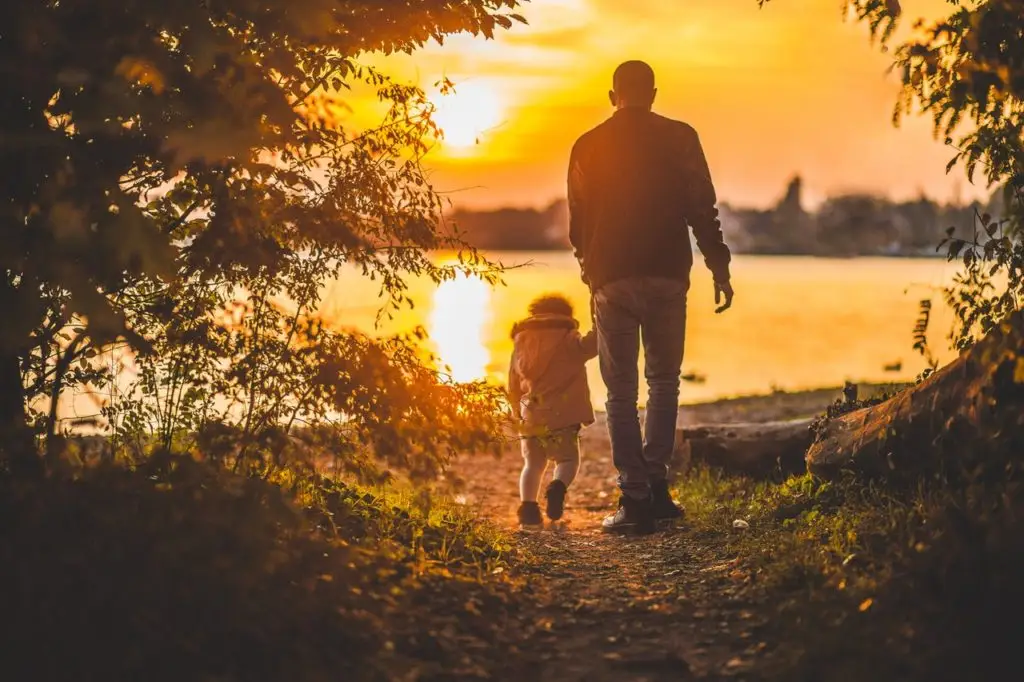
Everything I have built — the work, the words, the love, the fight — is evidence that I was here. Legacy is not about ego; it is about inheritance. It’s the map I leave so that those who come after me know which roads I traveled and which ones I carved myself.
I didn’t just live — I mattered. I didn’t just survive — I built. I didn’t just carry the weight — I turned it into something worth passing on.
Legacy is the echo of resilience. It’s the way our names are spoken long after we’re gone, not because of what we owned, but because of what we gave. It’s in the laughter of our children, the wisdom in our stories, the courage in our choices. It’s the understanding that freedom isn’t free — it’s inherited through sacrifice and nurtured through love.
I want my legacy to be more than monuments and memories. I want it to be a movement. A current that carries my children and their children toward something higher. A legacy that teaches them that worth is not measured in wealth but in impact — in how many lives you lift, how much light you leave behind, how fiercely you love in a world that tried to harden you.
Every lesson I’ve learned — every scar, every mistake, every small victory — is a page in the book I’m writing with my life. My legacy is not the story of perfection, but of persistence. I want them to see the cracks and know that light can still pour through.
When I am gone, I hope my children don’t just remember me as a man who endured, but as one who expanded. Who took what was broken and made it whole. Who took what was heavy and made it sacred. Legacy is the art of continuation — a bridge built from our struggle to their freedom.
And if they ever doubt their place in this world, I hope they can look at what I’ve left behind and whisper, He was here. And because he was, I can be.
Closing Reflection

Voldemort’s horcruxes were born of fear, curses scattered to keep him alive. Mine are born of love, blessings scattered so my family will live free.
Faith. Knowledge. Health. Wealth. Resilience. Community. Legacy.
Seven fragments of a whole life. Seven anchors for the generations to come. Seven reminders that yes, we are heavy, but we are unbreakable.
So if you hear my words, don’t just read them — feel them. Let them rest heavy on your chest, right where the heartbeat reminds you you’re still here. Because every burden I carried, every scar I wore, every prayer I whispered in the dark — it wasn’t just for me. It was for you.
These horcruxes aren’t curses. They’re coordinates. Maps for those who will come after us — to find their faith, guard their knowledge, protect their health, multiply their wealth, stand in their resilience, honor their community, and build their legacy.
I’ve broken myself open so the next generation can be whole. And if one day they find my name on the wind, I hope it sounds like a hymn — a reminder that even when the world tried to bury us, we bloomed anyway.
Because we are the living proof. The continuation. The echo of every ancestor who refused to stay silent in the face of a storm. Heavy, yes — but divine. Carved from struggle, crowned by grace. And in that weight, we have found our wings.
So when they ask who we are, tell them: We are the sons and daughters of the unbroken. We are the dream made flesh. We are the light that keeps coming back.
And even when we’re gone, the story doesn’t end — it multiplies.